


We created supplementary curriculum for Introduction to Proof courses including a set of Rich Proof Texts with Mathematician Author Stories and a Unit on Sets and Logic. The goal is to help students engage with reading mathematical proofs in meaningful ways.
Reading Proof
In thinking about proof as a genre of text, we wondered what it would be like to teach a course in proofs something like a literature course. Like great literature we wanted students to appreciate proofs as something that could be compelling, engaging, and even beautiful. In contrast, many introductory proof courses tend to use short, straightforward proofs that prove relatively obvious claims. We recognize there are good reasons for using such proofs to support the development of some of the basic tools before we layer on complexity, as students in Introduction to Proof courses are often new to the language and methods of proof. Recognizing the design challenges entailed, we nevertheless wondered if we could find a way to supplement introduction to proof courses with something that we hoped students might find compelling. This analogy with literature led us to shift from an exclusive focus on students writing proofs. While students need chances to write on their own, there is also value in having students read great stories or novels. Could reading great proofs also be a key ingredient in students’ mathematical experience?
To this end, we have created a textbook containing a collection of rich proofs written by modern mathematicians. The textbook was written with the aim of the proofs being relatively self-contained and accessible to a student at the Introduction to Proof level. The textbook also includes Author Stories of the modern mathematicians who wrote the proofs. In addition to the text itself, we offer some guidance on how on might use the text in an Introduction to Proof course.
We also have a Unit on Sets and Logic for an Introduction to Proof (or similar) class. A cornerstone of this unit is having students read proofs related to a theorem, where the students decide "what does it prove?". Again, we believe that reading proofs is an important aspect of learning to prove.
RAMP Textbook: Rich Proof Texts
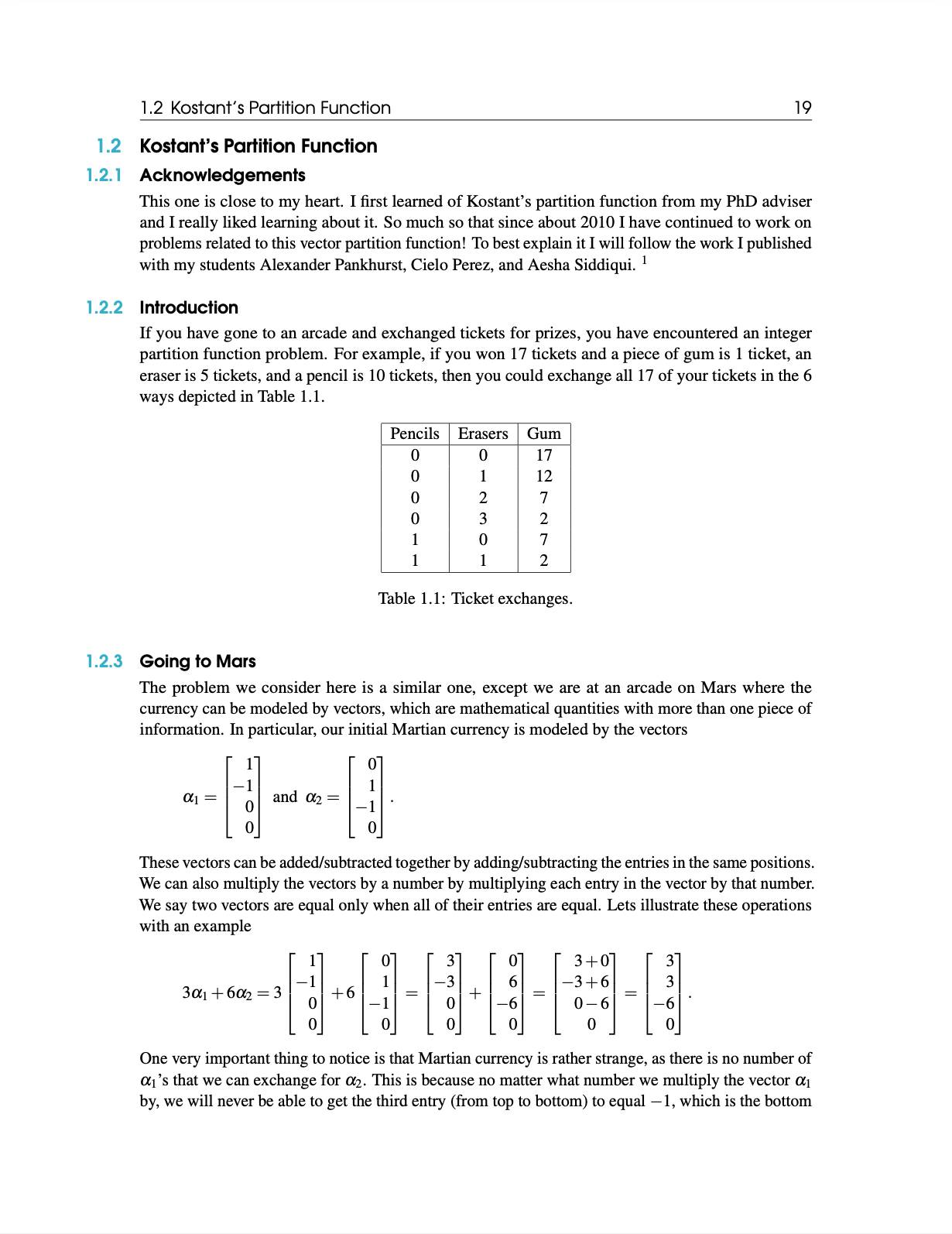
Each chapter of our text presents a Rich Proof Text for students to read. Within the text, the Rich Proof Texts are labelled by the name of the theorem being presented, but include:
1) necessary background information such as definitions, examples, and facts used,
2) the theorem to be proven,
3) the proof, and
4) (sometimes) a reflection on why the author chose this theorem and proof.
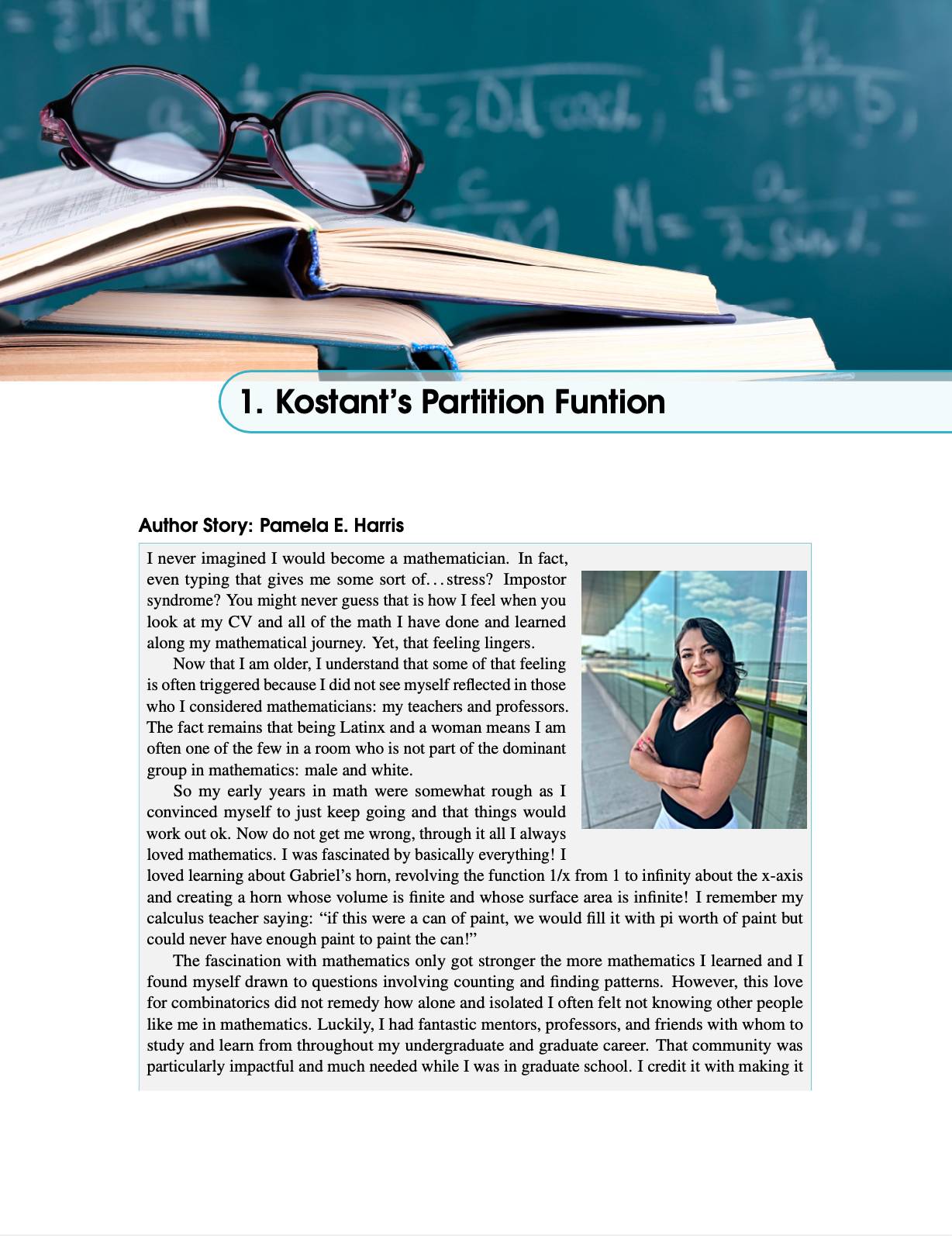
RAMP Textbook: Author Stories
Each member of the project team prepared a 2-3 page account of their experiences in the mathematical sciences. The Author Stories (or links to them) precede the Rich Proof Texts that were written by those authors. They can be read alongside the Rich Proof Texts or used separately.
Unit on Sets and Logic
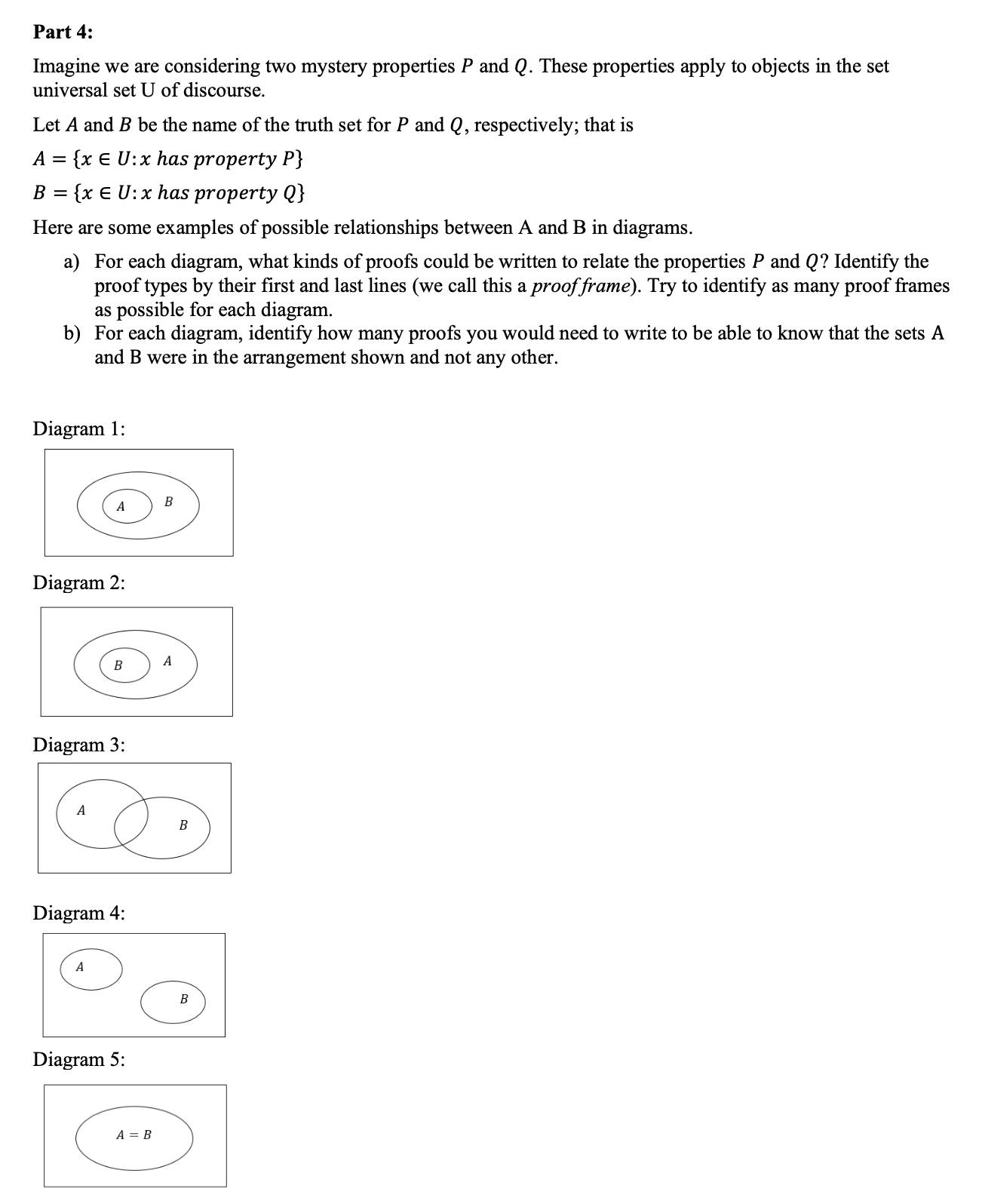
This instructional unit contains about nine lessons for introducing students to sets, logic, conditional proof techniques, and statements with nested quantifiers (“there exists… for every” and “for every… there exists”). This unit depends on the following core features:
- Mathematical logic formalizes mathematical language. It is best to begin with students reading mathematical statements that make sense to them and reflecting on that language.
- Associating mathematical properties (e.g., “divisible by 6” or “equilateral”) with sets helps students to see a repeated structure across mathematical statements with the same form (e.g., “Given any…, if…, then…”).
- Representing those sets using Euler diagrams is an approachable tool for representing, reflecting on, and communicating about these set relationships.
We developed these lessons for use in Introduction to Proof courses, in which they would take up about the first four weeks. However, they can be used in any setting in which logic and proof techniques are being developed (e.g., geometry or discrete mathematics). They are designed to be implemented in an active learning environment in which students work in small groups on tasks, the instructor talks with students to help advance their ideas, at intervals the whole class comes together to share insights and discuss roadblocks, and course content emerges as the instructor ratifies and names student contributions.
In our shared materials, you'll find the activities themselves as well as instructor materials that offers insight into the design, learning goals, and expected student responses.
Project Team
Principle Investigators
Paul Dawkins
Texas State University
Kathleen Melhuish
Texas State University
Kristen Lew
Texas State University
Kyeong Hah Roh
Arizona State University
Would you like access to these materials?
Fill out the following form to request access!